The Jizhi G-X100 features a photon-to-photon latency of just 9 milliseconds, faster than 12 ms for Apple’s Vision Pro
A Chinese start-up founded by a Stanford University graduate, who previously worked for Apple’s extended reality (XR) unit, is attracting attention for developing a chip that can power headsets and artificial intelligence glasses.
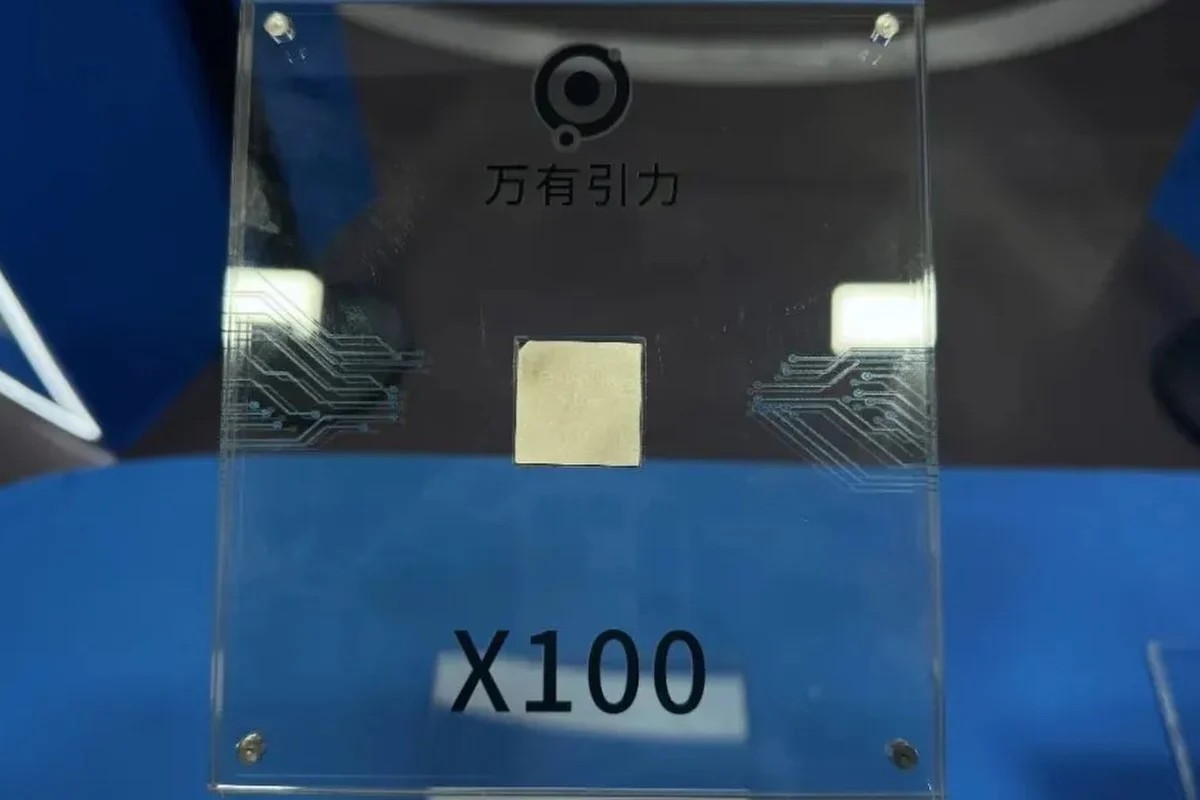
Founded by Wang Chaohao, GravityXR last week showcased China’s first all-in-one mixed reality (MR) chip, the Jizhi G-X100, which uses the advanced 5-nanometre node.
The product, part of a new line of chips that claim to surpass Apple in certain metrics, has attracted interest as the core component for future gadgets such as lightweight AI glasses and high-end XR headsets like Apple’s Pro Vision.
The G-X100 features a photon-to-photon latency (PTP) of just 9 milliseconds, faster than 12 ms for Apple’s Vision Pro, the Chinese company said in a statement.
Yongjiang Lab in Ningbo, an incubator backed by the provincial government of Zhejiang that backed Wang’s venture in its early days, said the chip was “a significant breakthrough for China in the area of spatial computing”.
Spatial computing is a field of science that enables computing equipment to “see” the real world and combine that into a virtual world in the form of extended reality.
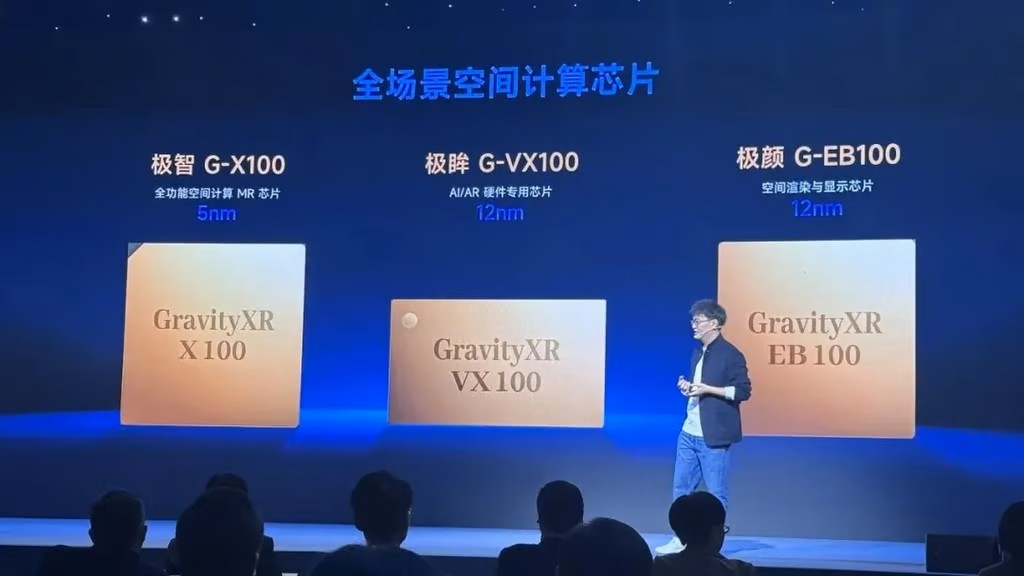
GravityXR last week showcased China’s first all-in-one mixed reality (MR) chip, the Jizhi G-X100, which uses the advanced 5-nanometre node. Photo: Handout
According to the lab, the new chip solved a key problem for smart mixed reality devices as the chip was extremely fast, powerful and energy efficient, allowing the weight of AI glasses to be reduced to below 100 grams.
PTP latency in augmented reality (AR) headsets refers to the time it takes for the image to be transferred through the headset to a user’s vision. It is a crucial metric as higher latency tends to break the seamless integration between virtual content and real world events, leading to visual discomfort and disorientation by users, according to He Wancheng, an analyst at XR consulting firm Wellsenn.
XR refers to technologies such as AR and MR, that blend the virtual and physical worlds, as well as virtual reality which fully replaces what users see in the real world.
Global XR display shipments were expected to rise 6 per cent this year, while AR glasses shipments were estimated to grow 42 per cent in the same period, according to consulting firm Counterpoint Research.
In addition to the Jizhi G-X100, GravityXR also debuted two other chips, one for recording high-definition video in products such as AR glasses, and another that delivers low power use in spatial and three-dimensional rendering.
GravityXR is backed by investors including HongShan, formerly Sequoia Capital China, Gaorong Capital, Chinese contract electronics manufacturer Goertek, and video game developer miHoYo. It counts Meta Platforms, Goertek and Chinese robotics firm Agibot as its clients, according to a report by Ningbo Daily.
TrendForce 2025 Near-Eye Display Market Trend and Technology Analysis
Publication Date : 8/29, 2025
Language : Traditional Chinese / English
Format : PDF
Page Number: 168
|
If you would like to know more details , please contact:
|


