As Artificial Intelligence (AI) and Large Language Models (LLMs) continue to evolve, the demand for ubiquitous, high-efficiency AI access is surging. In this landscape, AR smart glasses are emerging as the primary vehicle for the "always-on" AI companion, shifting from niche devices to a strategic category in next-generation consumer electronics. This momentum is no longer confined to startups; from consumer electronics giants to internet heavyweights and automotive manufacturers, the industry is witnessing an influx of investment, ushering in an unprecedented golden era of development for smart glasses.
The wearable nature of AR glasses makes 'all-day AI' capability their defining competitive edge—a promise that hinges on achieving a perfect balance of lightweight design, portability, and long battery life. Meeting this requirement raises the bar for hardware architecture and key components—most notably the optical display module, which exerts the greatest influence on overall form factor and perceived aesthetics. Consequently, LEDoS (MicroLED), owing to its advantages of compact size, high brightness, and low power consumption, has rapidly emerged as the mainstream display solution for the lightweight AR glasses segment, effectively propelling the market's rapid expansion.
Once LEDoS largely alleviates fundamental wearability barriers—such as weight and volume—visual comfort and immersion naturally become the defining focus of the next competitive cycle.
As Lightweight Design Becomes the Industry Default, MicroLED Technology Stands Out
Catalyzed by AI, the consumer AR market is flourishing, with hardware manufacturers achieving significant progress in 'lightweight' and 'fashion-forward' designs. A review of AR glasses released this year reveals that total device weight has dropped to under 40 grams, clearly evidencing the lightweight trend—with display technology serving as the critical pillar behind this shift.
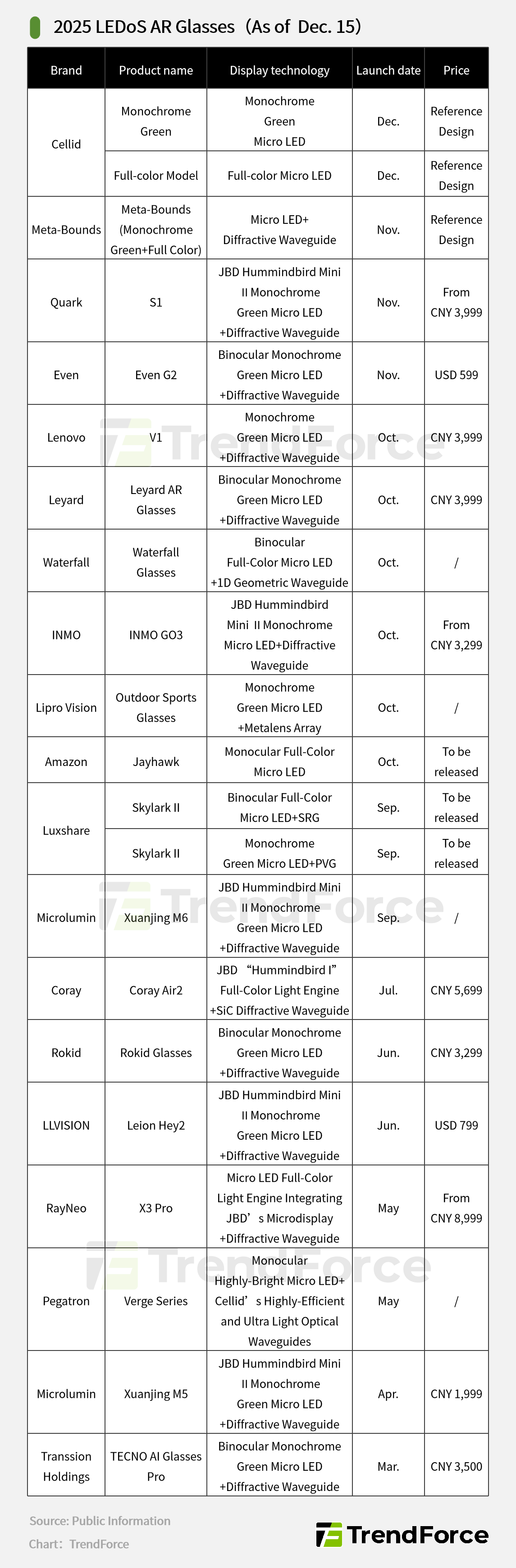
Currently, LEDoS (MicroLED) and OLEDoS (MicroOLED) are the mainstream technology choices for achieving lightweight consumer AR/XR glasses. The two technologies are diverging in positioning: LEDoS is typically paired with optical waveguides to enable ultra-lightweight AR glasses, with device weights already reaching the 30–40g range. OLEDoS, by contrast, is usually combined with BirdBath optics for indoor video viewing, resulting in heavier form factors which typically weigh around 70g.
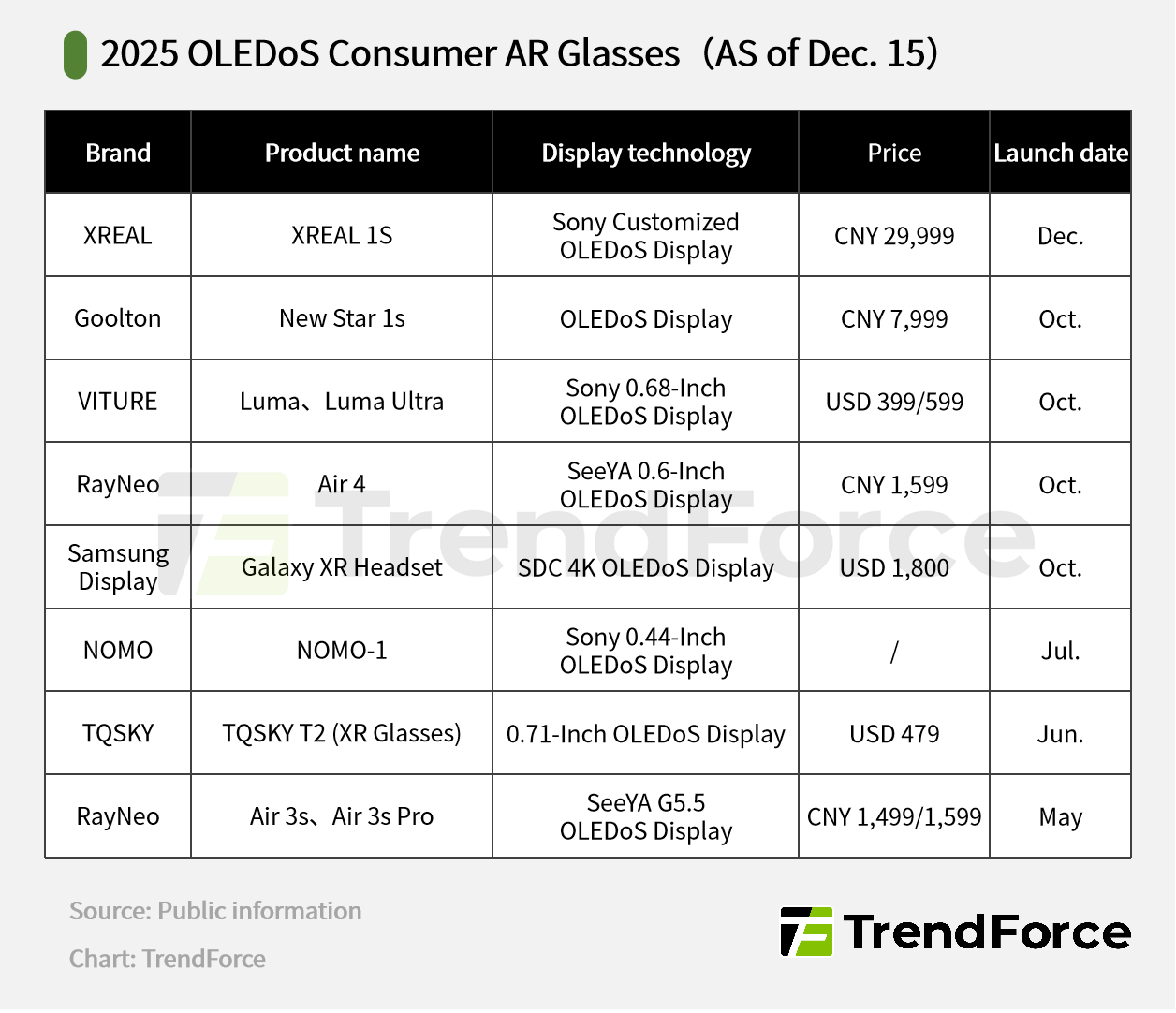
According to the latest "2025 Near-Eye Display Market Trends and Technology Analysis" report by TrendForce, the market penetration rates for OLEDoS, LEDoS, and LCoS in the AR glasses market in 2025 are projected to be 53%, 37%, and 7%, respectively.
OLEDoS currently leads the market in penetration, primarily due to early industry focus on video-viewing applications. Leveraging high process maturity, cost efficiency, and inherent full-color capabilities, the combination of OLEDoS and BirdBath optics has become a practical choice for entertainment-centric scenarios.
However, the BirdBath solution is limited by low transmittance, which compromises the true optical see-through experience essential for all-day wearability. Furthermore, luminance remains a significant constraint; while OLEDoS panels can generate thousands of nits, inefficiencies within the optical path typically limit eye-level brightness to just a few hundred nits.
Conversely, optical waveguide solutions—distinguished by superior transmittance and a form factor closer to conventional eyewear—have emerged as the definitive display standard for AI smart glasses. The strategic coupling of LEDoS and optical waveguides unlocks a transformative set of advantages: ultra-high brightness, exceptional energy efficiency, a miniaturized footprint, and superior transmittance. With source brightness exceeding millions of nits, this architecture ensures thousands of nits reach the eye even after waveguide coupling, simultaneously conquering the dual challenges of lightweight daily portability and high-visibility display requirements.
Judging by the trend of new AR glasses released this year, LEDoS technology has indisputably become the preferred solution for both mainstream and emerging AR brands. Based solely on announced product releases, it is evident that the number of LEDoS-based designs is nearly double that of OLEDoS counterparts, demonstrating its robust market penetration.
A closer look at the underlying technology reveals that today’s LEDoS-based AR glasses largely standardize on the 4μm pixel pitch MicroLED as their primary mass-production foundation. This solution has successfully addressed industry pain points associated with traditional microdisplay solutions like LCoS in terms of volume, contrast ratio, brightness, and energy consumption.
Currently, the landscape of major MicroLED microdisplay suppliers comprises key players such as JBD, Mojo Vision, and Plessey. Significantly, an examination of lightweight AR glasses which have successfully reached retail channels shows a clear pattern: the overwhelming majority integrate JBD’s MicroLED microdisplays. This market reality underscores JBD’s pronounced first-mover advantage and commanding dominance in mass production and commercial deployment.
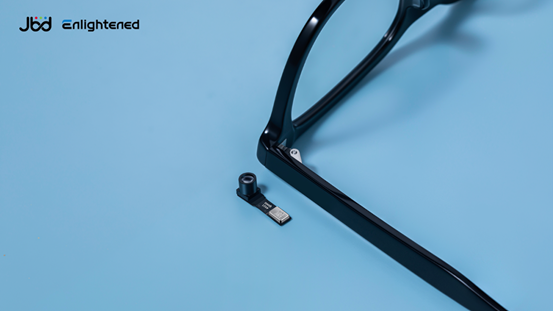
JBD Hummingbird Mini Ⅱ Monochrome Light Engine
According to LEDinside, since achieving mass production in 2021, JBD's 4μm pixel pitch "Hummingbird" series MicroLED has undergone continuous rapid iteration. Currently, JBD has launched two microdisplay panels (0.13-inch and 0.1-inch) and four light engines (two monochrome, two polychrome). The performance of this series continues to improve, with particular breakthroughs in red light efficiency, enabling the typical power consumption of the X-Cube polychrome projector to remain at a level of merely tens of milliwatts.
This success has established the JBD 'Hummingbird' platform as a commercial powerhouse in consumer AR. Beyond demonstrating the commercial maturity of LEDoS technology, it effectively neutralizes the long-existing tension between luminance and energy efficiency—a dilemma that once seemed insurmountable for the industry. Currently, the "Hummingbird" platform powers nearly 50 commercial end products, including Rokid Glasses, Quark AI Glasses, RayNeo X3 Pro, INMO GO2/GO3, Meizu (MYVU) MLVision M5, and LLVision Leion Hey2. It is evident that the scaled application of LEDoS has become a key force driving the lightweight development process of mainstream AR glasses.
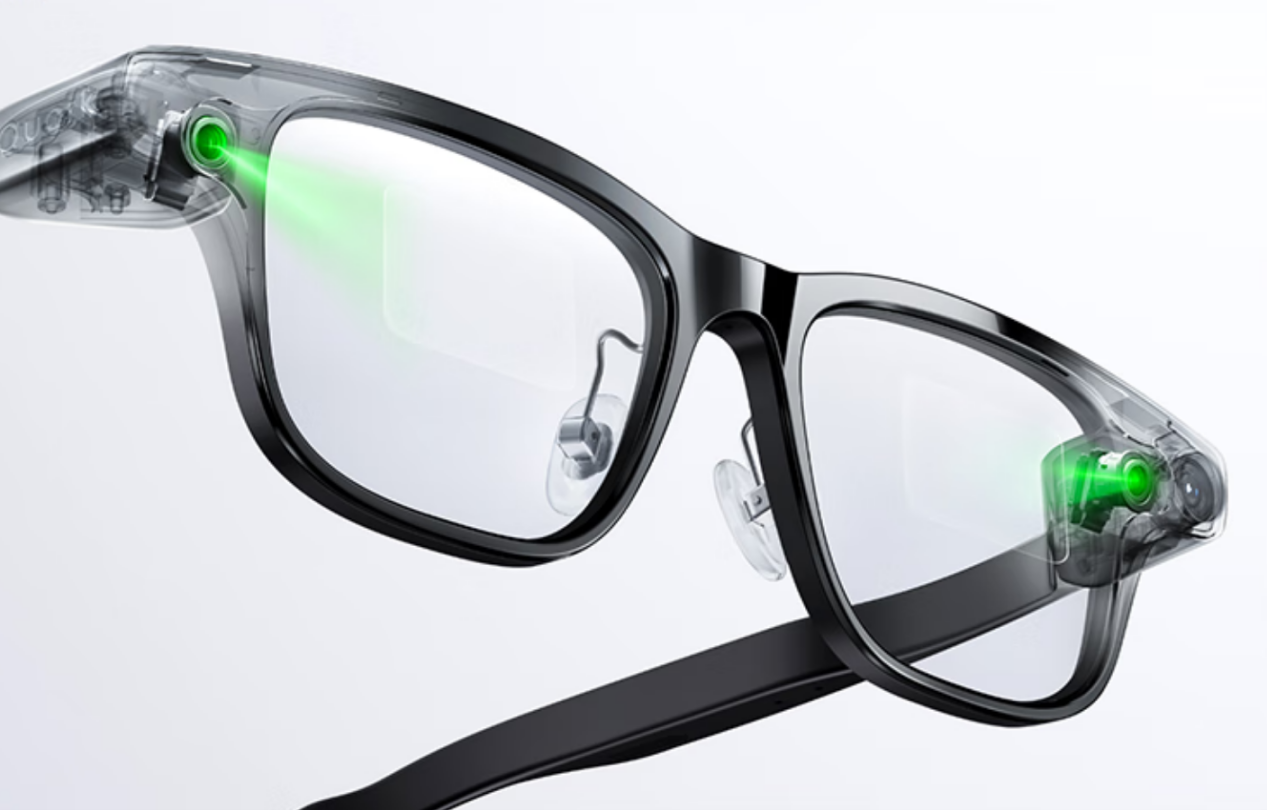
Quark AI Glasses S1
Industry Upgrades Raise Specifications: 2.5μm as the Next Industry Standard
If the successful application of LEDoS technology has significantly propelled AR glasses into the "lightweight" era, then the current market's extreme pursuit of "lightweight" design has, in turn, posed stricter challenges and higher demands on LEDoS technology.
This demand points directly to an upgrade in "display experience"—as AR glasses move towards daily use, user requirements for visual comfort and immersion rise accordingly. In practice, this requires enhancing pixels per degree (PPD) and expanding the field of view (FOV) without compromising the signature lightweight profile of consumer AR. However, to achieve the balance of lightweight design, high PPD, and large FOV, the industry recognizes that the only viable path is to further reduce the pixel pitch of the microdisplay panel.
This evolutionary direction offers distinct advantages: shrinking the pixel pitch enables more pixels to be integrated within the same panel size, or conversely, allows for a smaller panel at the same resolution. This leads to a substantial decrease in the light engine’s packaging volume, providing the design flexibility needed to simultaneously achieve high PPD and large FOV within a lightweight form factor.

"Roadrunner I" Polychrome Projector
In this context, JBD pioneered the launch of its next-generation 2.5μm pixel pitch MicroLED platform, 'Roadrunner.' The platform’s microdisplay panel reaches a pixel density of 10,160 PPI—2.56 times the pixel count per unit area of the 4μm 'Hummingbird' series. This leap in density facilitates a wider FOV, effectively eliminating the 'small window' visual limitation in the user experience. AR glasses based on the latest 'Roadrunner I' polychrome projector can achieve an angular resolution exceeding 32 PPD while maintaining a thin and light design, delivering visuals with unprecedented clarity and depth.
While miniaturization typically entails a trade-off in luminous efficiency, JBD has overcome this bottleneck through refined manufacturing processes and advanced pixel architectures. These optimizations effectively mitigate the performance challenges inherent in ultra-small MicroLEDs, resulting in superior luminous efficacy and a significantly enhanced energy efficiency ratio.
Regarding power consumption, the backplane of the "Roadrunner" series microdisplay panels adopts a 22nm process for the first time, controlling backplane power consumption at 18mW. The typical power consumption of the "Roadrunner I" is only 90mW, greatly alleviating battery anxiety for AR glasses and making all-day wear possible.
It is reported that the "Roadrunner" series will focus primarily on full-color light engines. Drawing on JBD’s extensive mass-production expertise, the platform will further capitalize on its advantages in MicroLED packaging, display algorithms, and optical design to ensure superior cost efficiency. With 'Roadrunner I' polychrome light engine samples now available, JBD has partnered with leading international technology firms to fast-track the market rollout of next-generation lightweight AR smart glasses.
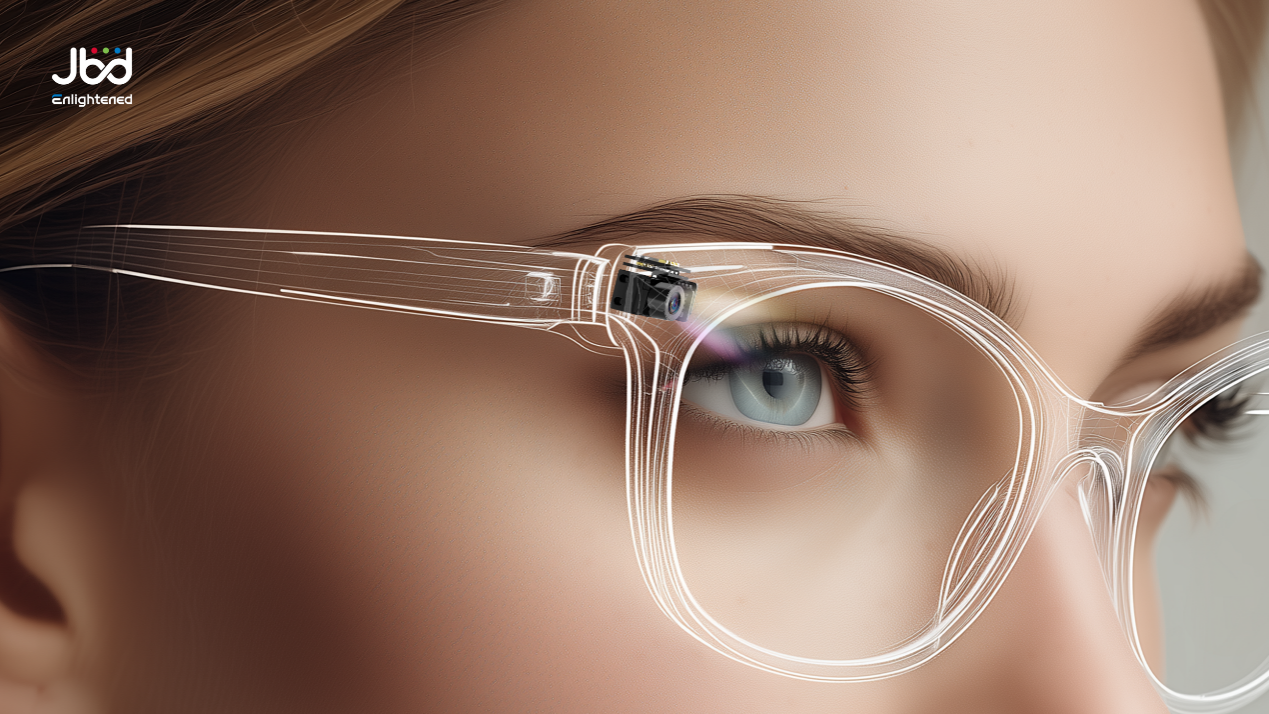
Schematic of "Roadrunner I" Polychrome Projector with Smart Glasses
In AR near-eye display scenarios, LEDoS is widening its competitive lead over LCoS through the progressive scaling of pixel pitches—delivering unmatched advantages in light engine volume, contrast, brightness, and energy efficiency. The 2.5μm 'Roadrunner' platform serves as a definitive testament to the superiority of LEDoS, perfectly aligning with the core evolution of consumer AR: ultra-slim form factors, high-fidelity imagery, extended battery life, and superior visual comfort.
As AR Glasses Market Accelerates, the Future of LEDoS is Promising
Amidst the rapid convergence of generative AI and surging computational capacity, the rise of AR smart glasses has reached an inflection point. Industry consensus points to 2026 as the pivotal breakout year for the AR market. According to TrendForce, global AR glasses shipments are projected to reach 600,000–700,000 units in 2025, signaling a sustained growth trajectory that will ignite a surge in demand for advanced near-eye display solutions.
As the industry pivots toward 'all-day wearability,' the competitive landscape of display technologies is undergoing a fundamental realignment. Currently, OLEDoS light engines are primarily paired with BirdBath optics—a configuration optimized for immersive video-viewing. However, constrained by the low transmittance and inherent bulky form factor of BirdBath designs, these systems carry a weight penalty that precludes true daily-wear utility. As brands redirect investment away from niche entertainment devices, TrendForce projects that OLEDoS penetration will peak at 53% in 2025 before entering a steady decline. The battle for the 'lightweight, daily-wear' segment has converged on the optical waveguide roadmap.
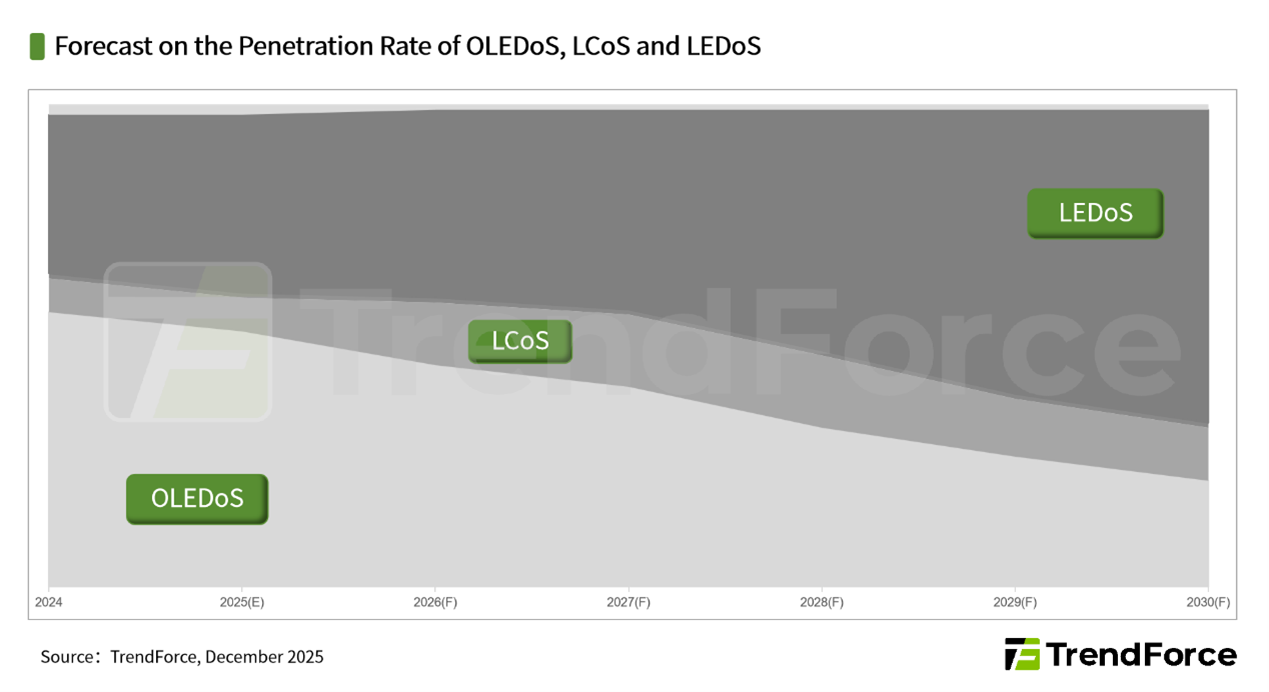
Penetration Trend of OLEDoS, LCoS, and LEDoS
Optical waveguide solutions typically pair with either LEDoS or LCoS microdisplay technologies. Compared to LCoS, LEDoS (especially the 2.5μm pixel pitch platform) demonstrates leading competitive advantages:
-
Smaller Volume: The LCoS light engine is a passive light-modulating solution; burdened by the complex physical structure of additional light sources, its volume is relatively large. In contrast, LEDoS is a self-emissive technology with a simpler light engine structure, occupying only a fraction of the volume of LCoS, which is more conducive to lightweight eyewear design.
-
Higher Energy Efficiency: By virtue of its individual pixel-level control, LEDoS consumes less power than LCoS during typical operation, which is crucial for extending the battery life of AR glasses.
-
Superior Visual Performance: While LCoS is often limited by contrast constraints inherent in its illumination system, LEDoS offers a much higher contrast ratio, making the distinction between highlights and shadows far more pronounced. This enhances the dimensionality of virtual objects, giving them a lifelike presence. Furthermore, the 2.5μm LEDoS platform achieves higher pixel density (PPI), delivering crisp, refined imagery that significantly elevates the near-eye viewing experience.
Despite a short-term visibility boost fueled by the Meta Ray-Ban display glasses, LCoS faces structural headwinds that will likely impede its long-term penetration. These challenges stem from a persistent lack of a competitive edge in volume, brightness, and contrast—a gap that continues to widen as global tech leaders concentrate their resources on LEDoS as the primary display roadmap.
Regarding LEDoS, it is poised for high-speed growth driven by dual forces from the brand side and the supply chain:
-
Brands Actively Entering, Driving Market Expansion: A primary driver is the strategic entry of industry titans. Global giants such as Apple, Meta, and Google are increasingly aligning their future roadmaps with LEDoS technology. This international momentum is mirrored by the rapid rise of domestic smart glasses brands, creating a global synergy that validates the immense scalability and commercial value of the LEDoS platform.
-
Supply Chain Maturity Solidifies Leadership: Beyond brand momentum, the evolving microdisplay supply chain is accelerating the widespread adoption of LEDoS. The maturity of the 4μm platform, alongside the rapid scaling of the new 2.5μm architecture, is effectively addressing previous limitations in pixel density and brightness. These breakthroughs make the technology's performance and cost advantages increasingly clear. Driven by this dual momentum from both brands and the supply chain, LEDoS is on a steady path to market dominance, with its penetration rate projected to reach 65% by 2030.
Conclusion
The dual pursuit of "lightweight form factors and visual comfort" has crystallized as the industry's clear mandate. The 4μm LEDoS architecture successfully laid the groundwork, underpinning the initial realization of lightweight AR glasses. However, to unlock the next level of display fidelity and immersion, the shift from 4μm to 2.5μm represents more than just an upgrade—it is widely recognized as an inevitable industry standard required to meet future performance benchmarks.
While 4μm LEDoS solutions will maintain their dominance in the lightweight sector for the immediate future, the long-term industry shift toward full-color, high-definition displays enabled by the 2.5μm platform is inexorable. Epitomized by the JBD "Roadrunner" platform, this new generation of LEDoS technology is poised to establish new paradigms in form factor, visual fidelity, and user experience for the next era of AR/AI smart glasses.
According to TrendForce analysis, as global technology giants intensify their strategic commitment to the AR/AI eyewear landscape, full-color LEDoS solutions are primed to achieve widespread commercial maturity between 2027 and 2028. Looking forward, it is clear that LEDoS—capitalizing on the transformative potential of ultra-fine pixel pitch—will not only accelerate its market adoption but definitively establish itself as the paramount choice for the consumer AR era.


