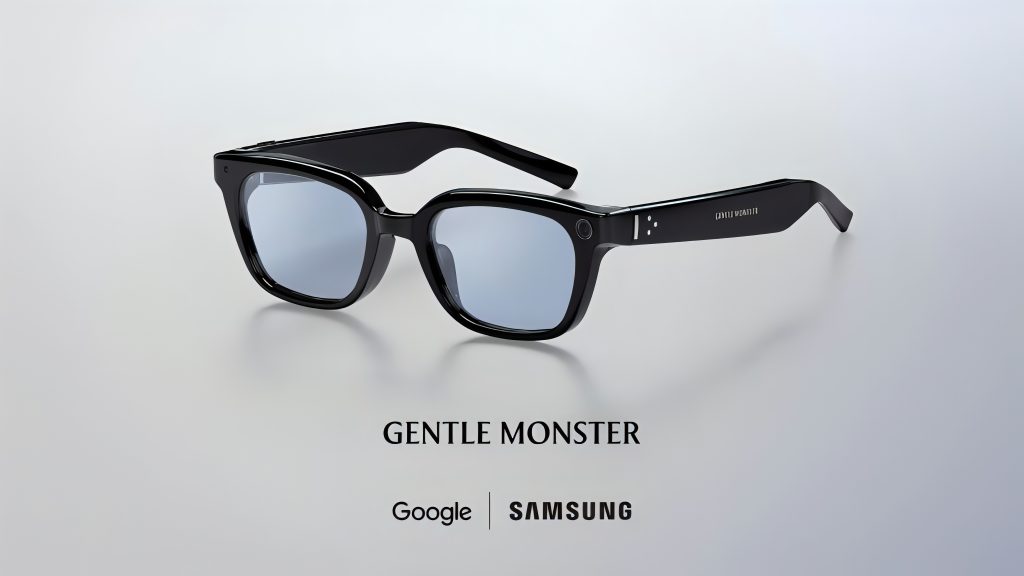
Samsung is preparing to enter the AI smart glasses market as competition among major tech companies intensifies. According to Chosun Biz, Samsung Electronics reportedly plans to launch its first AI smart glasses, dubbed “Intelligent Eyewear,” in South Korea and the U.S. in mid-December. Pricing has yet to be finalized.
The timeline appears to have shifted from earlier expectations. The Korea Herald reported in early October that Samsung planned to launch its first AI glasses in November, suggesting a possible delay of about a month.
The initial rollout will exclude major markets including Europe, China, and Japan, Chosun Biz reports. Samsung reportedly plans to assess demand and user feedback in South Korea and the U.S. before expanding to other markets, given that AI glasses represent a new product category.
Gemini AI, Galaxy Integration and Market Competition
Samsung’s upcoming smart glasses will focus on AI-powered assistance and Galaxy integration. According to Chosun Biz, Intelligent Eyewear will run on Google’s Android XR platform with Gemini AI, using cameras and microphones to recognize surroundings and provide real-time translation and voice-guided navigation. The glasses will also capture documents and meeting scenes, automatically organizing the information in the Notes app on a connected Galaxy smartphone.
Unlike display-equipped AR glasses, Samsung’s first AI glasses will reportedly feature a display-free design centered on voice interactions, as The Korea Herald reported in early October.
The glasses will feature Qualcomm’s Snapdragon AR1 Gen 1 processor and offer up to nine hours of battery life per charge, Chosun Biz adds. Samsung has also partnered with Gentle Monster and Warby Parker on the design, unveiling two models at Google I/O in May and another two at Galaxy Unpacked in London on October 22.
Competition is also intensifying in the smart glasses market. According to Tom’s Guide, XREAL unveiled its Aura glasses on October 28, with a limited-time starting price of US$1,099 for the 12GB/256GB model, US$200 below its regular price of US$1,299. The 16GB/512GB version is priced at US$1,299. Developed with Google and Qualcomm, the Android XR glasses focus on spatial computing and are expected to ship in mid-November in the U.S., Canada, Japan, and South Korea.
Samsung will also face an expanding Meta lineup, including the Ray-Ban Meta Gen 3 starting at US$449 and the camera-free Ray-Ban Meta Audio at US$349. With Samsung’s pricing still undecided, Chosun Biz notes that pricing and everyday usability could be key factors in determining the glasses’ initial market reception.
(Photo credit: Samsung)
TrendForce 2026 Near-Eye Display Market Trend and Technology Analysis
Publish : 30 November 2026
File Format : PDF
Language : Traditional Chinese / English
|
If you would like to know more details , please contact:
|


