What Is RGB Backlight? A Next-Generation Display Technology That Enhances Color Gamut and Optical Efficiency with RGB LEDs
Competition in the display industry is expanding beyond brightness and resolution to include color accuracy and energy efficiency. Against this backdrop, RGB Backlight technology, which directly uses Red, Green, and Blue light sources, is gaining attention as a next-generation display solution.
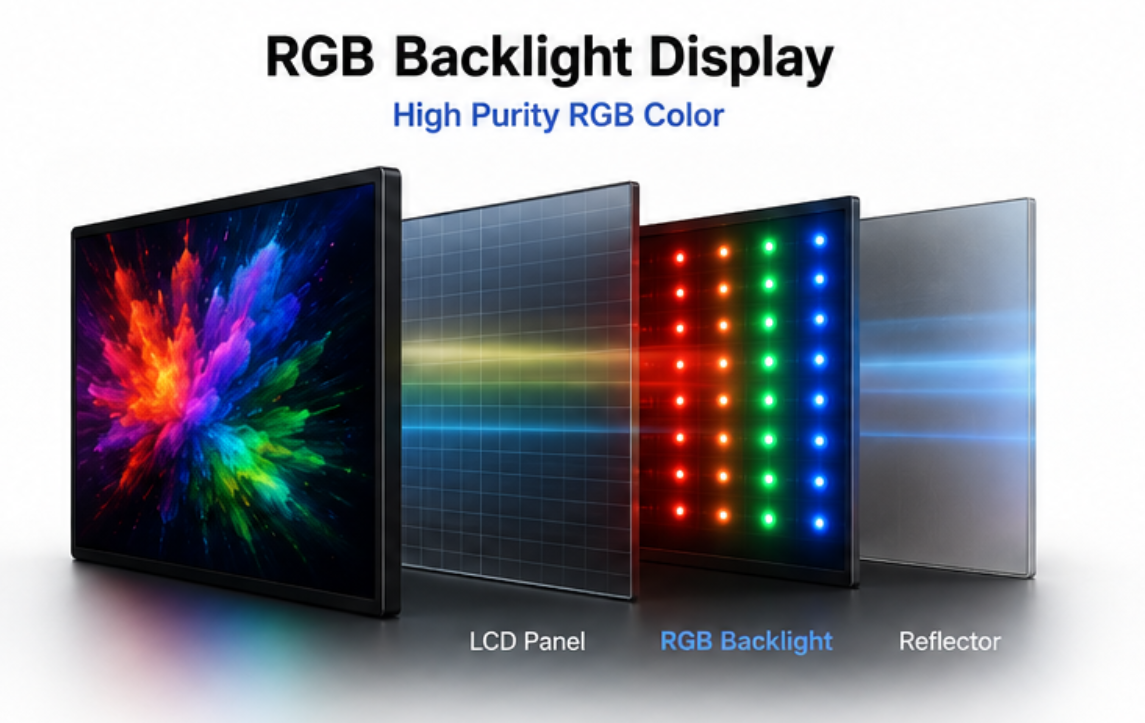
Unlike conventional white LED backlights, RGB Backlight uses separate red, green, and blue LEDs as light sources. This approach enables displays to reproduce a wider range of colors with greater vividness and color purity.
What Is RGB Backlight?
RGB Backlight is a backlight technology that directly drives Red, Green, and Blue LEDs to supply light to an LCD panel.
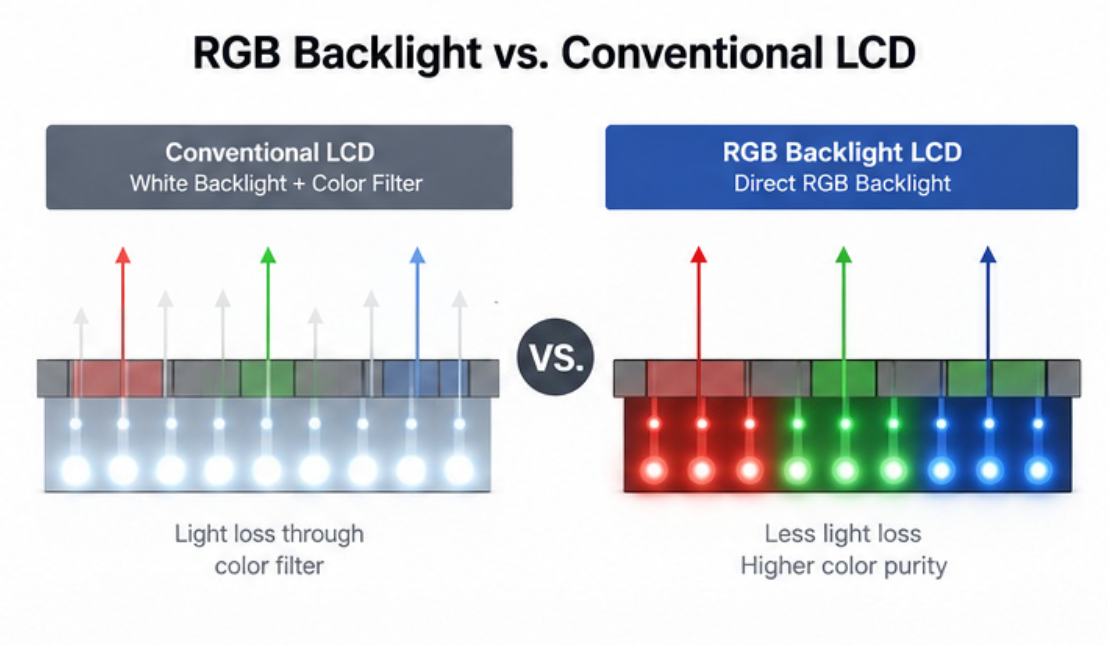
Conventional LCD displays typically combine blue LEDs with phosphors to generate white light. The white light then passes through color filters to create Red, Green, and Blue colors. During this process, some light may be absorbed or converted into unnecessary wavelengths, resulting in optical and color loss.
Instead of generating white light and separating it through color filters, RGB Backlight uses Red, Green, and Blue light sources from the beginning. By precisely controlling the wavelength and brightness of each color, the technology is well suited to achieving high color purity and a wide color gamut.
How Is RGB Backlight Different from Conventional White LED Backlights?
Conventional white LED backlights generate screen colors by passing a single white light source through color filters. While this structure is relatively simple and widely used in LCD displays, some light and color may be lost as white light passes through the filters.
RGB Backlight differs by directly using three separate color light sources.
-
Uses Red, Green, and Blue LEDs as individual light sources
-
Independently controls the wavelength and brightness of each color
-
Reduces optical loss during the color-conversion process
-
Enables high color purity and a wide color gamut
-
Supports precise color control based on content and usage environment
RGB Backlight can therefore serve as a next-generation backlight technology for premium displays where color performance is critical.
How RGB Backlight Enhances Color Gamut
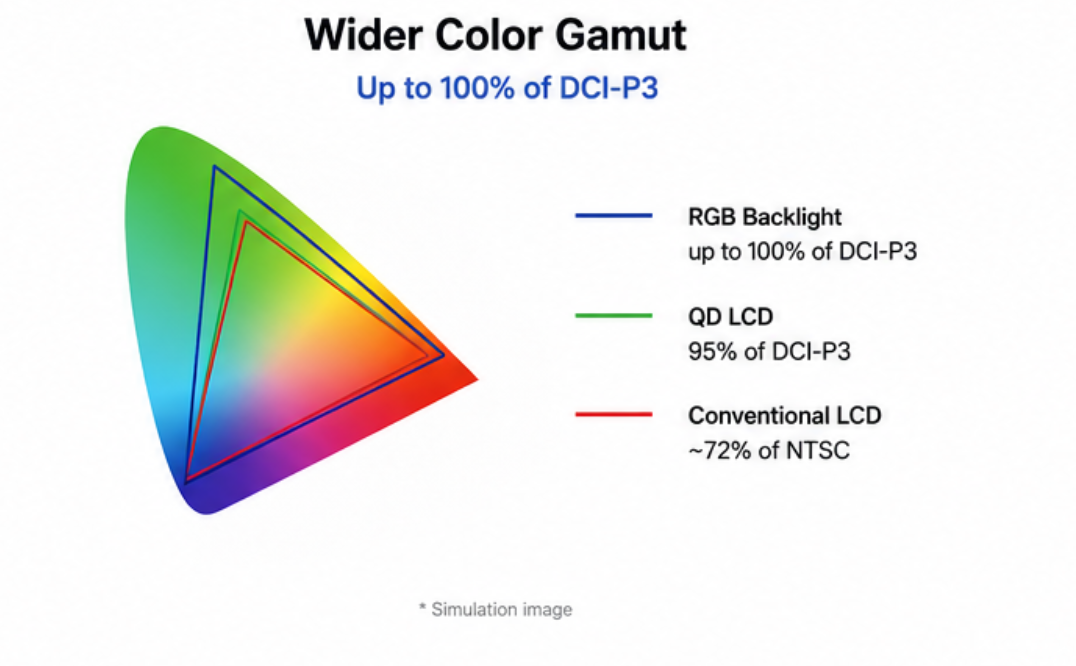
A display’s color gamut indicates how wide a range of colors the screen can reproduce accurately.
RGB Backlight allows the wavelengths of the Red, Green, and Blue light sources to be directly designed and controlled. The more clearly separated the spectrum of each color is, the higher the color purity the display can achieve. This makes it advantageous for reproducing a wider color range than conventional white LED backlights.
It can also reproduce vivid reds and greens, as well as deep blues, more clearly. This provides a key competitive advantage for automotive displays, gaming monitors, and professional monitors where color accuracy and visibility are essential.
Key Advantages of RGB Backlight
1. Outstanding Color Reproduction
Direct RGB light sources improve color purity and enable a wider color gamut. This helps reproduce video and image colors more vividly and naturally.
2. Precise Color Control
The brightness of the Red, Green, and Blue light sources can be controlled independently, enabling precise adjustment of color temperature and color balance.
3. Potential Reduction in Optical Loss
Because the required colors are generated directly, unnecessary optical loss caused by generating white light and separating it again through color filters can be reduced.
4. Display Differentiation
As brightness and resolution become increasingly standardized, color reproduction is emerging as a key factor in differentiating image quality and user experience. RGB Backlight can strengthen the competitiveness of premium displays.
Where Can RGB Backlight Be Applied?
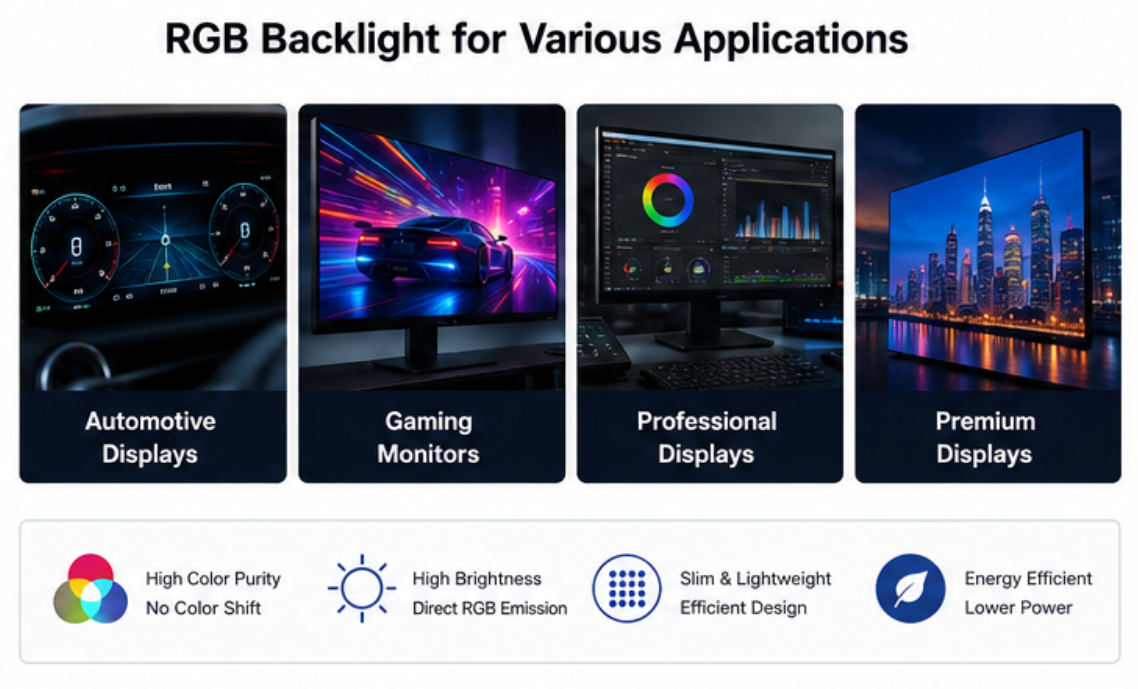
RGB Backlight can be used in a wide range of displays requiring high color reproduction and precise control of light sources.
Automotive Displays
Automotive displays must clearly present essential information even under strong ambient light and varying temperature conditions. RGB Backlight can deliver vivid colors and high visibility for instrument clusters, center information displays, and head-up displays.
Gaming Monitors
Conventional gaming monitors use backlight strobing and high-speed dimming to improve motion clarity. However, afterglow from KSF phosphors may cause red ghosting and temporary color imbalance.
RGB Backlight directly controls the Red, Green, and Blue light sources, enabling sharper and more accurate colors even in fast-moving scenes.
Professional Monitors
Precise color reproduction is essential in video production, design, and medical imaging. RGB Backlight can contribute to improving color quality and color-management performance in professional displays.
Premium TVs and Commercial Displays
Premium TVs, casino monitors, and digital signage require bright and vivid colors to be reproduced consistently over extended periods. RGB Backlight is suitable for premium displays that demand high image quality and a wide color gamut.
Technologies Required to Implement RGB Backlight
RGB Backlight cannot be completed simply by arranging three colors of LEDs. The wavelength, brightness, temperature characteristics, and driving method of each light source must be precisely controlled.
Because Red, Green, and Blue LEDs have different optical and electrical characteristics, the following technologies are required:
-
High-efficiency RGB opto-semiconductor design
-
Optical design for uniform color and brightness
-
Individual driving and control of RGB light sources
-
Color-shift compensation over temperature and operating time
-
Thermal management optimized for the display structure
-
Uniformity control of color and brightness across large displays
The performance of RGB Backlight is therefore determined by the combined capabilities of LED devices, optical design, driving technology, thermal management, and color calibration.
Why RGB Backlight Is Gaining Attention
The display market increasingly demands not only higher brightness but also more accurate colors, lower power consumption, slimmer structures, and greater reliability.
RGB Backlight is significant because it can enhance color reproduction while maintaining the high brightness, long lifetime, and scalability of LCD displays. It has strong potential as a new image-quality differentiator in premium markets such as automotive displays, gaming monitors, and professional monitors.
Based on its opto-semiconductor design and manufacturing capabilities, Seoul Semiconductor is developing next-generation RGB Backlight technology to improve display color performance and optical efficiency.
Application conditions and detailed specifications may vary depending on display size, structure, target brightness, color-gamut requirements, and other customer needs.
Frequently Asked Questions
How Is RGB Backlight Different from a Conventional LED Backlight?
Conventional LED backlights mainly use white light, while RGB Backlight directly uses Red, Green, and Blue LEDs as individual light sources. This enables more precise control of each color and a wider color gamut.
Is RGB Backlight a Technology That Replaces OLED?
RGB Backlight is designed to improve the image quality and optical efficiency of LCD-based displays. Rather than simply replacing OLED, it strengthens the competitiveness of LCDs in applications requiring high brightness, long lifetime, and wide color reproduction.
What Products Can Use RGB Backlight?
RGB Backlight can be applied to automotive displays, gaming monitors, professional monitors, premium TVs, casino monitors, and digital signage that require high color reproduction and visibility.
Are RGB Backlight Product Specifications the Same for Every Application?
No. The optimal specifications may vary depending on display size, backlight structure, target brightness, color gamut, power consumption, and operating environment. Technical evaluation based on the customer’s product requirements is necessary for actual application.
(Photo credit: Seoul Semiconductor)
TrendForce 2025 Global Mini LED Backlight Market Trends and TV Brand Shipment Analysis
Release Date: 30 September 2025
Languages: Traditional Chinese / English
Format: PDF
|
If you would like to know more details , please contact:
|


