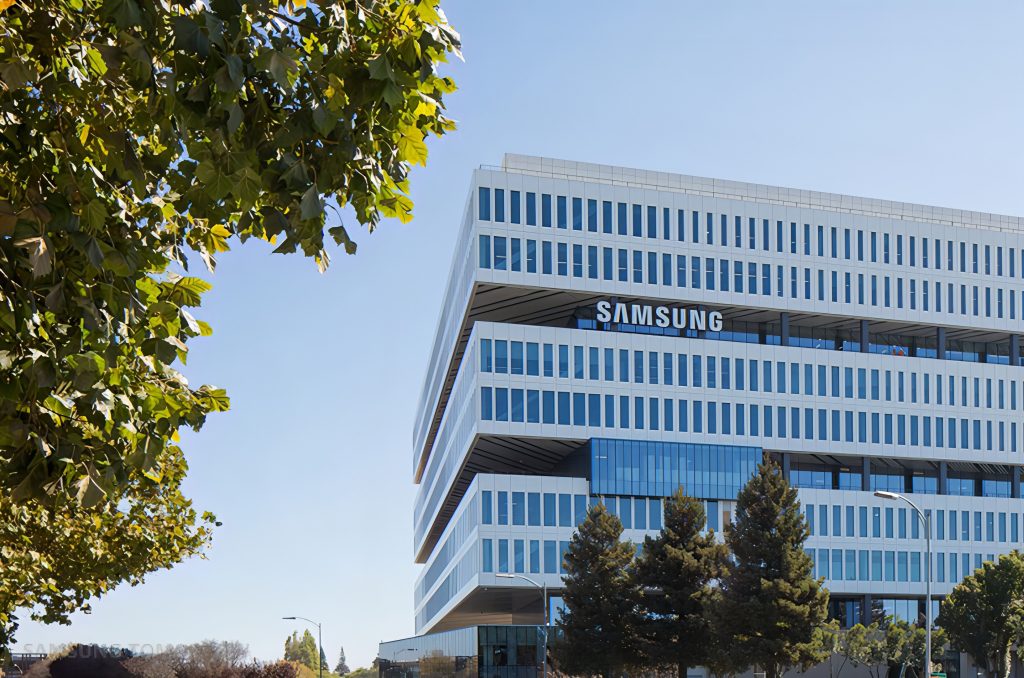
Samsung Foundry is reportedly stepping up its silicon photonics efforts. According to ZDNet, the company said in its 1Q26 earnings release that its foundry has secured orders from a major optical communication module provider.
Samsung Electronics said it is currently in talks with several major global customers on commercialization and plans to begin mass production with a leading optical communication module manufacturer in the second half of 2026, as noted by Maeil Business Newspaper.
Optical communication is a key enabler for AI data centers, which require high-volume data processing. According to TrendForce, traditional electrical transmission using copper cables faces physical limitations and may struggle to support the massive data movement required by next-generation AI infrastructure. As a result, optical transmission technologies are becoming increasingly important.
TrendForce forecasts that co-packaged optics (CPO) will steadily increase their share of optical communication modules in AI data centers, with penetration potentially reaching 35% by 2030.
Samsung Foundry Advances Silicon Photonics, Targets CPO Rollout by 2029
In March 2026, Samsung Electronics’ foundry division formally announced its entry into the silicon photonics market. According to The Elec, the company said it has achieved production readiness, including completing a process design kit (PDK), allowing manufacturing to begin as soon as customer designs are secured. Production is set to be carried out on a 300mm wafer platform.
The Elec reports that Samsung will initially target photonic integrated circuits (PICs), used in applications ranging from data center optical modules to optical engines for co-packaged optics (CPO). Notably, according to Samsung’s roadmap cited by The Elec, the company aims to roll out turnkey CPO services by 2029.
Meanwhile, the report highlights that TSMC has outlined a roadmap to integrate optical engines directly into switch packages in collaboration with NVIDIA. The partners introduced the Quantum-X Photonics InfiniBand switch for AI cluster interconnects last year and plan to launch the Spectrum-X Photonics Ethernet switch for broader networking applications in the second half of 2026.
Samsung Foundry, for its part, emphasized its differentiation through vertically integrated memory capabilities—an area where TSMC does not have the same level of integration, as noted by The Elec.
(Photo credit: Samsung)


