2014-04-07

DOE: Nanostructures Half a DNA Strand-Wide Show Promise for Efficient LEDs

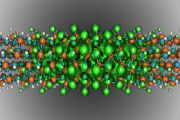
Nanostructures half the breadth of a DNA strand could improve the efficiency of light emitting diodes (LEDs), especially in the “green gap,” a portion of the spectrum where LED efficiency plunges, simulations at the U.S. Department of Energy’s National Energy Research Scientific Computing Center (NERSC) have shown.
Continue reading

microLEDs: from headlamps to the data center When we think about the evolution of AI technology, developments in machine learning and large language models come readily to mind, as do the latest graphics processing units (GPUs), high-bandwidth... READ MORE

The question of what makes a building "smart" has been debated in the industry for years. ams OSRAM provided a clear answer at Light + Building 2026: it is light — not as illumination, but as a sensory nervous system. It percei... READ MORE