The market of AR glasses is still in its early stages of development, with key technologies and product specifications yet to be established. TrendForce estimates that shipments will be less than one million units in 2025. Waveguides are a core component of whole devices that occupy a higher cost ratio. Efforts in cost reduction by waveguide manufacturers will be a crucial driver for the industry's move towards mass adoption. Recently, TrendForce had the opportunity to engage in a detailed conversation with Mr. Wang Jin, co-founder of Goowave, to learn about the latest advancement in their waveguide products and technologies.
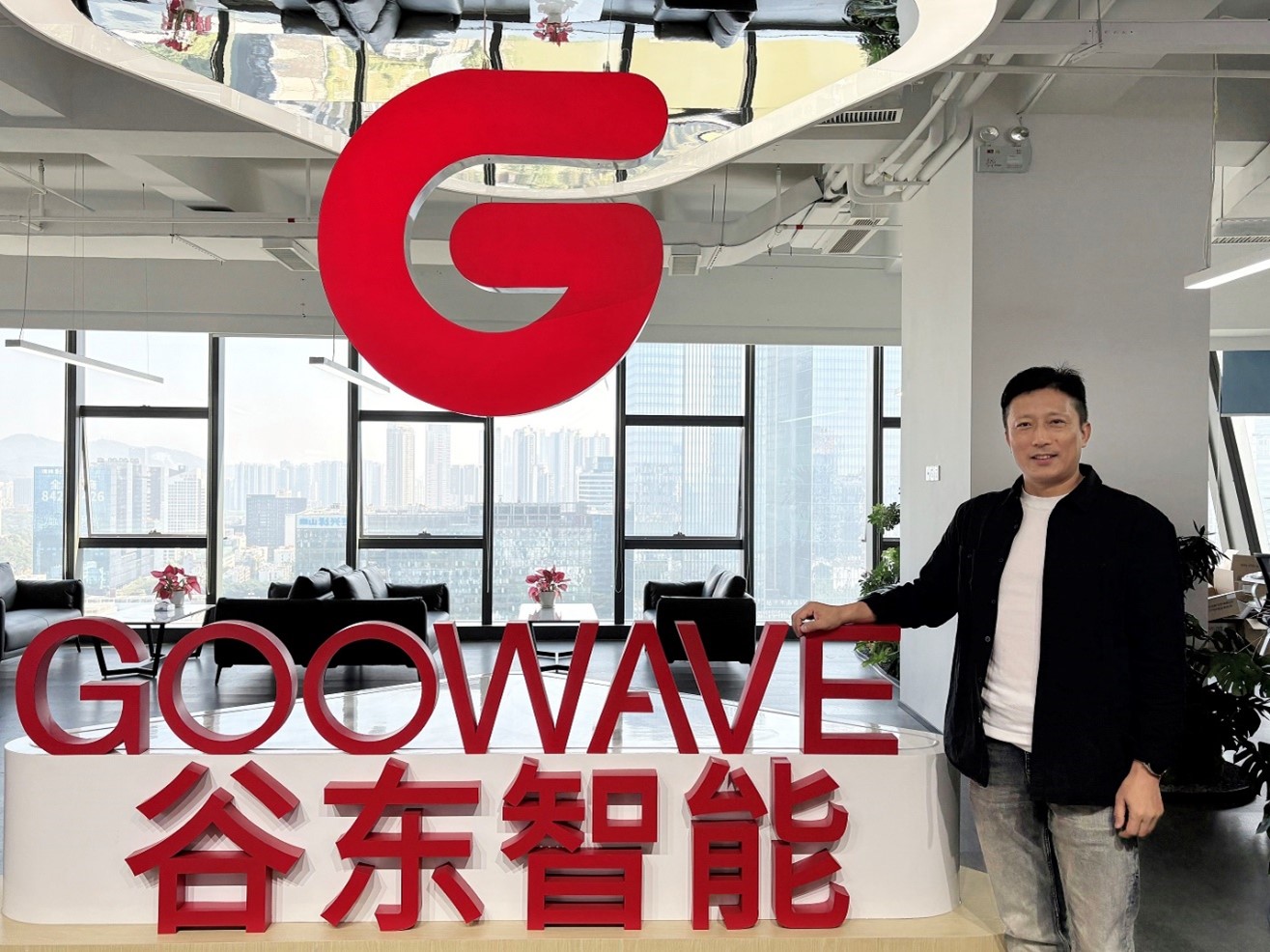
Wang Jin, Co-Founder of Goowave
Founded in 2019, Goowave is an internationally leading provider of AR+AI solutions, bringing together PhDs from top universities worldwide and seasoned experts in the AR field. With a robust research team, the company is focused on innovation and application of geometric waveguide and PVG (Polarization Volume Grating) waveguide technologies. In the PVG domain, Goowave has introduced a cost-competitive optical solution for AR glasses using LCoS + one-to-two PVG waveguide technology.
Global Leader in B2B Products
Goowave states that the company, by leveraging independent innovation across the entire industry chain, has established a globally leading position for its business of B2B products that cover more than 130 countries. Goowave’s products are widely applied in various fields such as customs, logistics, industrial manufacturing, aviation, and new energy. To solidify its industry position in the B2B sector, Goowave has launched the C3000E AR glasses, which are designed for “covering all industry application scenarios”, and constituted a full-process AR solution.
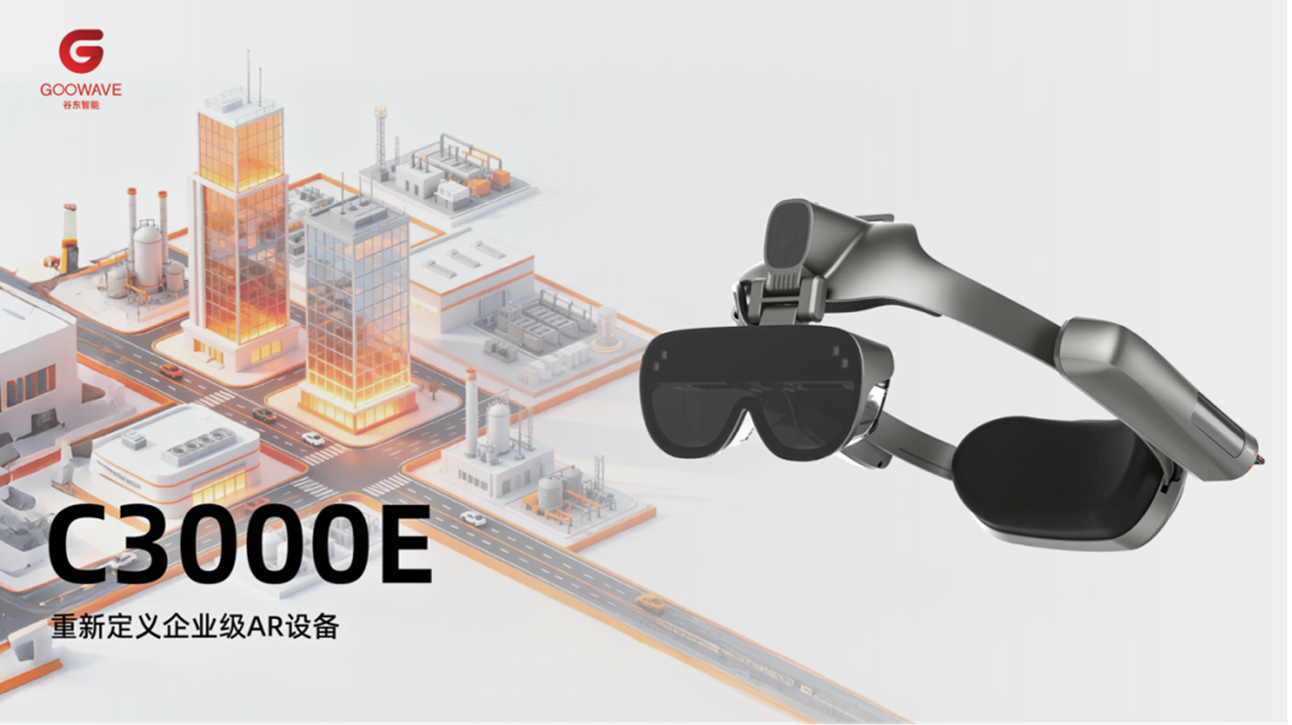
Goowave’s All-Industry Scenario AR Glasses C3000E
The core competitiveness of the C3000E lies in its dual breakthroughs of “full-color display + high performance.” The glasses feature high-transparency, high-brightness optical display technology with a Micro OLED display screen, offering a color contrast ratio of up to 50,000:1. This ensures clear and detailed images even in bright environments. With such excellent performance, the C3000E is widely applicable in various scenarios such as industrial inspection, remote operations and maintenance, security monitoring, as well as agricultural pest and disease investigation.
Launching a 'One-to-Two' AR Glasses Optical Solution based on LCoS + PVG Waveguides
In September 2025, Goowave and Appotronics jointly held a launch event to unveil the industry's first 'one-to-two' AR glasses optical solution combining LCoS with PVG waveguides. During the event, the two companies also signed a strategic cooperation agreement and a purchase order for 10,000 units.
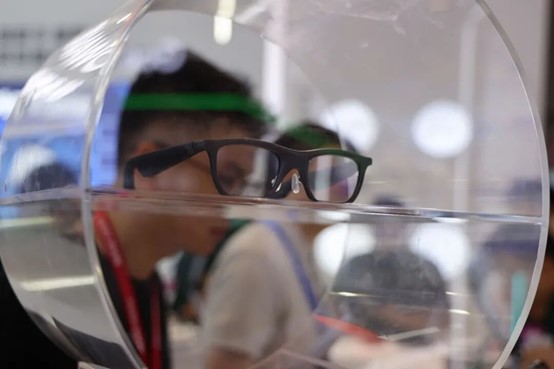
AR Glasses Using Goowave’s LCoS + PVG Waveguide Solution
Goowave stated that, in terms of display performance, the PVG waveguide completely eliminates the issues of rainbow effect and light leakage. This solution optimizes optical and grating designs, thereby significantly enhancing the purity and contrast of the images. In terms of cost control, Goowave is no longer constrained by high-cost photoresist materials and advanced processing equipment from abroad. Instead, the company developed its own holographic photoresist, holographic exposure system, and precision coating equipment, thus drastically reducing the R&D and production costs of PVG waveguides.
The traditional approach requires two separate light engine systems for the left and right eyes, keeping hardware costs high; whereas the “one-to-two” solution only uses one light engine system, halving the number of core display units and greatly reducing component and material costs.
Cost has always been one of the key factors limiting the popularity of AR glasses, so the LCoS + one-to-two PVG waveguide solution effectively addresses this pain point. The retail price of consumer-grade AR glasses based on this solution indicates a significant cost reduction, thereby enabling the AR device industry to achieve mass production on the scale of tens of millions of units.
Goowave Is Proactively Expanding and Upgrading Its Production Capacity for PVG Waveguides
Goowave has successfully established the world’s first automated production line for PVG holographic waveguides with an annual production capacity of 200,000 12-inch wafers. The company stated that in response to the growing demand from AR glasses manufacturers, it is actively advancing its expansion plans and expects to add an annual production capacity of 3 million PVG waveguides by the end of 2026.
Additionally, for single-layer full-color PVG waveguides, Goowave is working on the world’s first production process that uses inkjet printing to precisely control the alignment of light on the surface of the material. The company plans to start setting up the related production line near the end of 2026.
Looking ahead, Goowave stated that while relying on B2B business as a development foundation, it will focus on PVG waveguide technology to provide highly cost-competitive solutions for the consumer-grade AR glasses industry. The company aims for its solutions to become a major catalyst for the commercialization of AR glasses.
TrendForce 2025 Near-Eye Display Market Trend and Technology Analysis
Publication Date : 29 August 2025
Language : Traditional Chinese / English
Format : PDF
Page Number: 168
|
If you would like to know more details , please contact:
|


