Avegant, a venture-backed technology company, is developing next-generation display technology to bring augmented reality (AR) to life, transforming the way we play, learn, work, and interact with each other. Currently, Avegant is partnering with multiple waveguide manufacturers to promote its proprietary non-PBS LCoS technology. TrendForce recently had the opportunity to interview Avegant CEO & Founder Edward Tang, who shared valuable insights into the competitive landscape between LEDoS and LCoS light engines, as well as the company's latest advancements.

LCoS vs. LEDoS
When discussing LEDoS, Tang pointed out a common misconception. While LCoS is often criticized for being too bulky for mainstream AR glasses, the system-level footprint of LEDoS is actually larger than many imagine. Tang explained that LEDoS requires demura, heat sinking, and tilting of the light engine angle to mitigate ghosting—all of which add bulk. Furthermore, Tang noted that downstream partners anticipate future products will require a Field of View (FoV) larger than 30°, making PPD (pixels per degree) a critical specification, in order to increase immersive visual experience. While 40 PPD is expected to be the desired industry prerequisite, Tang believes it will be challenging for LEDoS to reach this target, as the EQE suffers a sharp drop when the pixel size is scaled down. Consequently, Tang emphasizes that LCoS remains the more viable solution for high-performance AR glasses, offering the necessary resolution and maturity that LEDoS currently struggles to match.
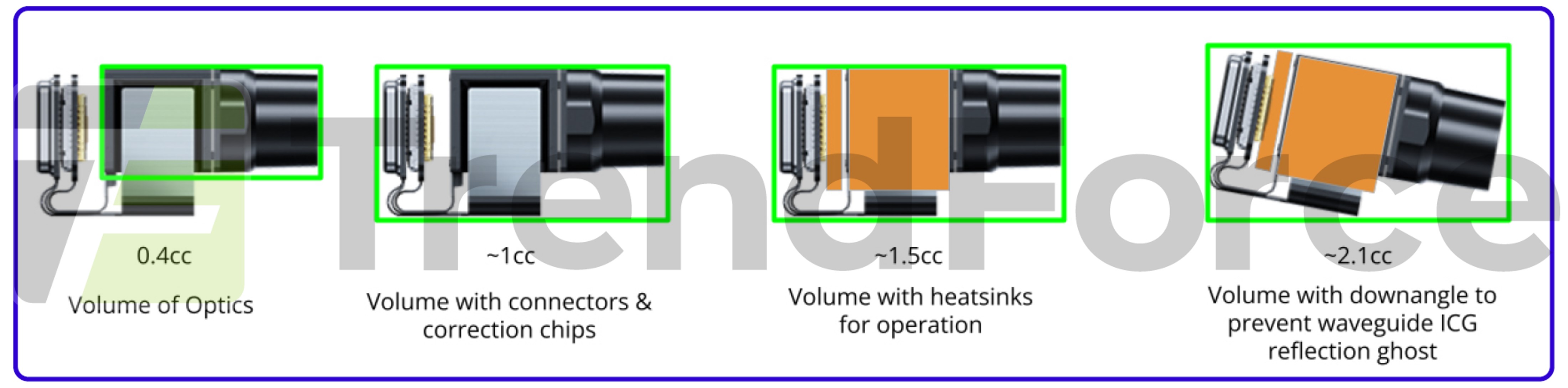
JBD Hummingbird Ⅰ actual volume requirement
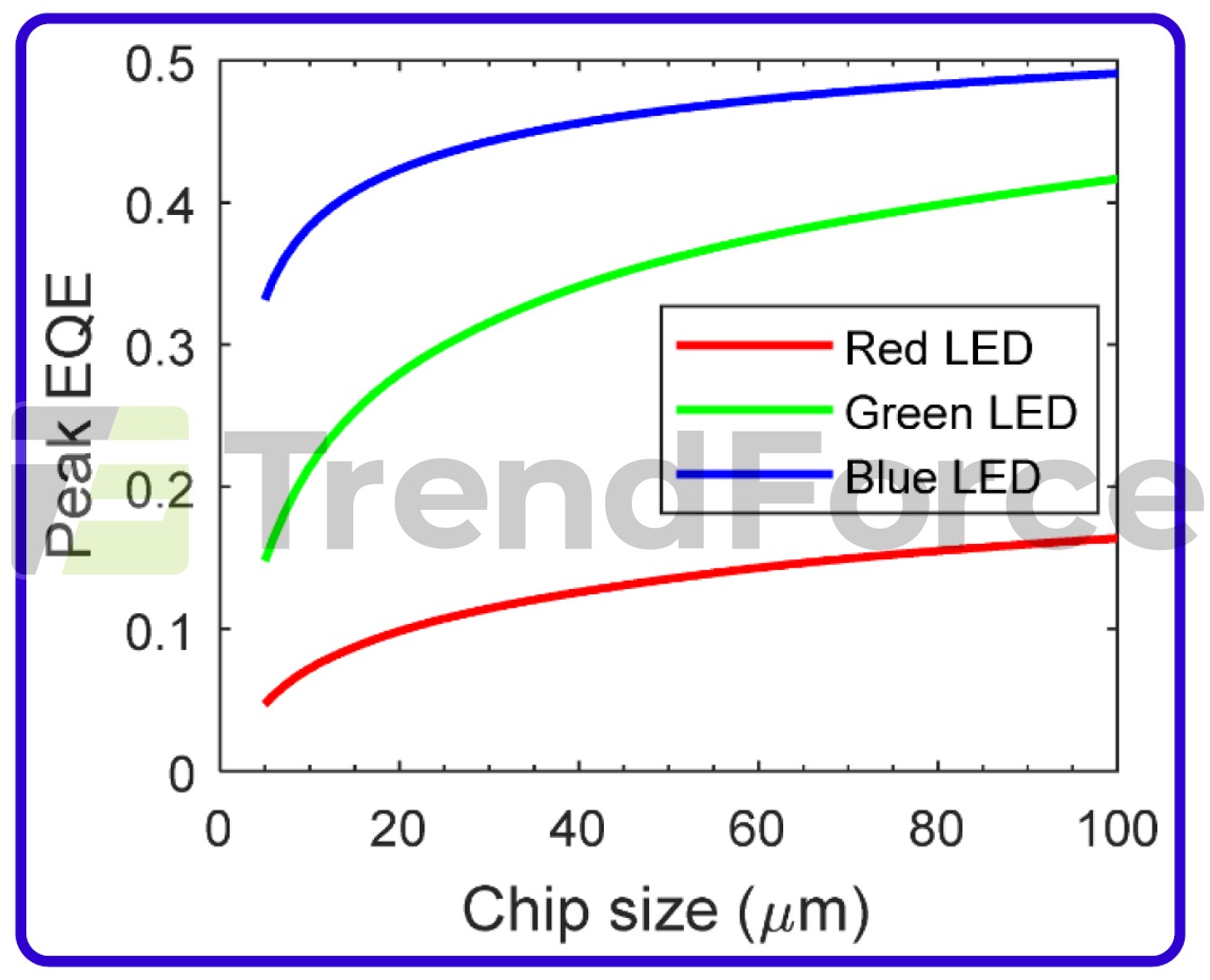
Decreasing EQE with smaller Micro LED size
PBS vs. Non PBS LCoS
Tang states that Avegant has excluded the traditional PBS (Polarizing Beam Splitter) from their LCoS light engine design due to inherent structural limitations. He pointed out that PBS units are bulky, heavy, and expensive, while suffering from low manufacturing yields. Furthermore, the PBS prism tends to have lower light efficiency. By being the only company in production to eliminate the PBS from the LCoS light engine, Avegant has achieved superior light efficiency and cost control. This innovation is the key reason they were able to significantly reduce the module size from 1.4cc to 0.7cc.
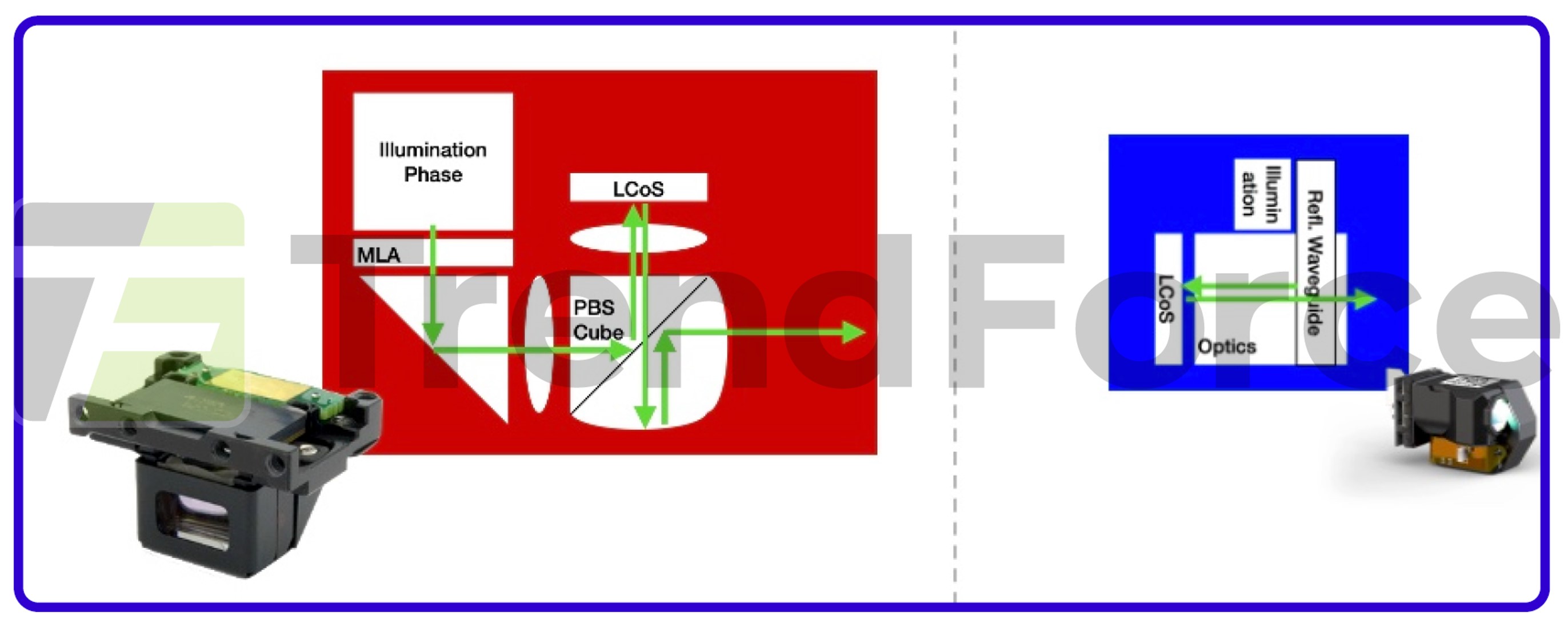
Conventional LCoS Architecture (left) and Avegant LCoS architecture (right)
The New Product: AG30-L3
Tang unveiled details of their new AG30-L3 LCoS light engine. With a compact 0.7cc form factor, it delivers a 30° FoV with 800×800 resolution, achieving an impressive 38 PPD. The module also features a 2.1mm×2.1mm pupil size and a fine 3µm pixel size. Tang further explained that the lower étendue of LCoS compared to LEDoS allows for a smaller pupil size. This lower étendue minimizes light loss when coupling light from the engine into the waveguide. As a result, Avegant has successfully reduced the pupil size from 2.4mm × 2.4mm down to 2.1mm × 2.1mm. Additionally, for this new product, Avegant has optimized the architecture using a sideways projection design. This approach eliminates the need for a bulky engine chamber on the temples, giving the AR glasses a form factor that is indistinguishable from standard eyewear.
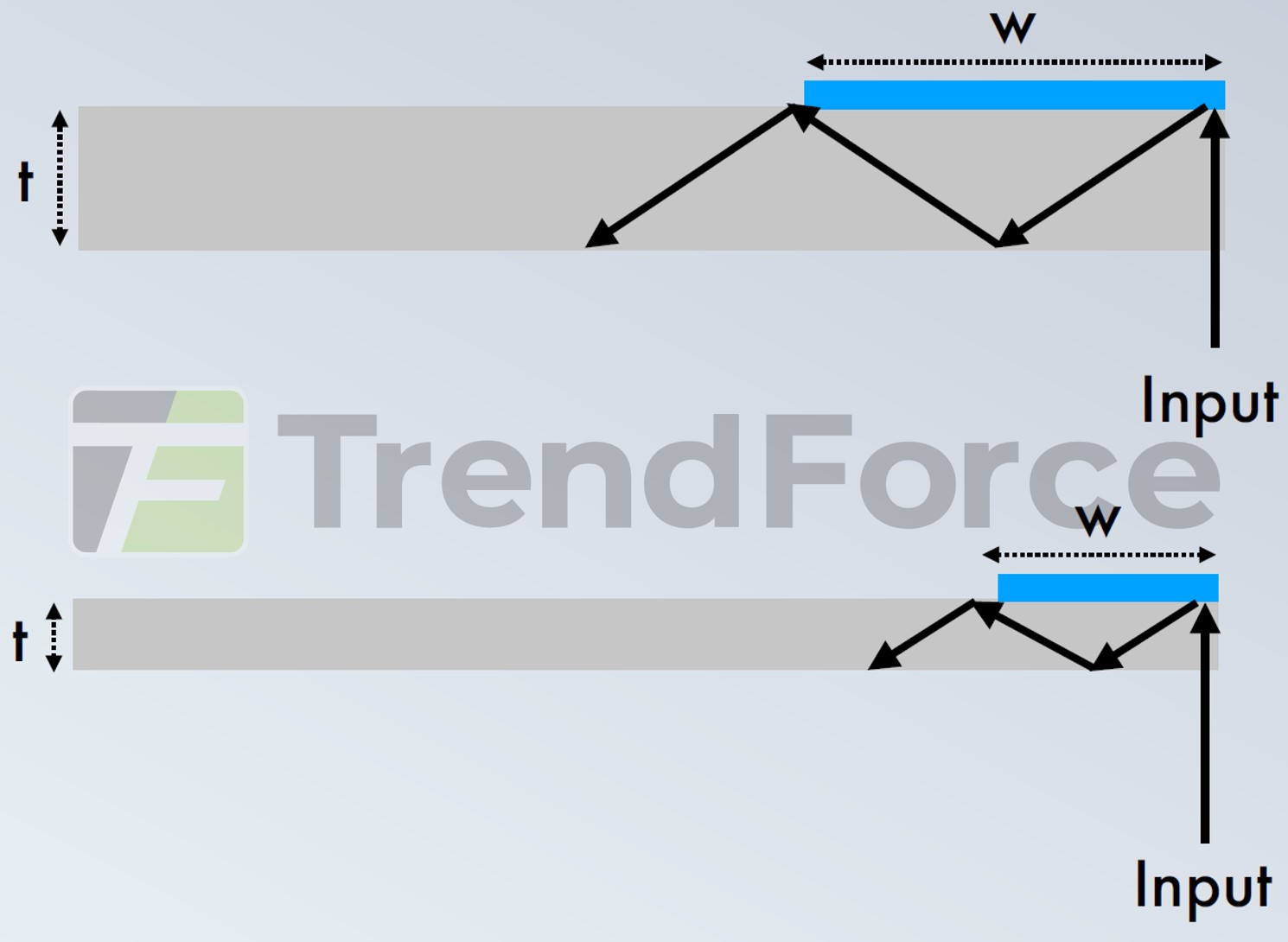
Small Pupil Advantages
2.1mm pupil can enable waveguide thicknesses down to 0.3mm with high efficiency coupling
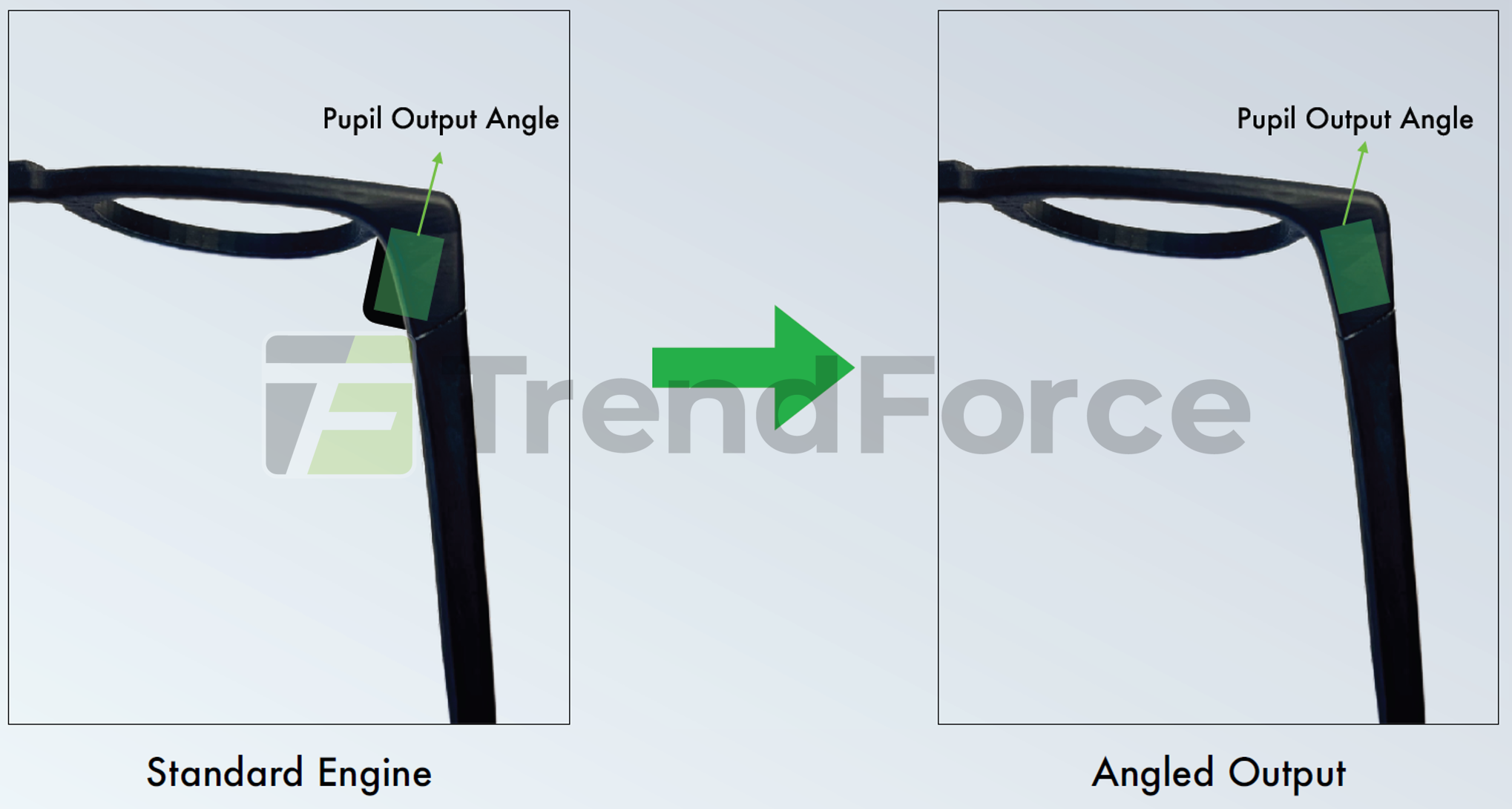
Angled output can mitigate waveguide glow and eliminate engine bump
Conclusions
Committed to continuous optimization, Avegant is actively benchmarking against the competition to push the limits of LCoS technology. With its compact, high-PPD light engines, the company is well-positioned to drive the next generation of AR glasses, proving that performance does not have to come at the expense of style or comfort.
Author: Estelle / TrendForce
TrendForce 2025 Near-Eye Display Market Trend and Technology Analysis
Publication Date : 29 August 2025
Language : Traditional Chinese / English
Format : PDF
Page Number: 168
|
If you would like to know more details , please contact:
|


